
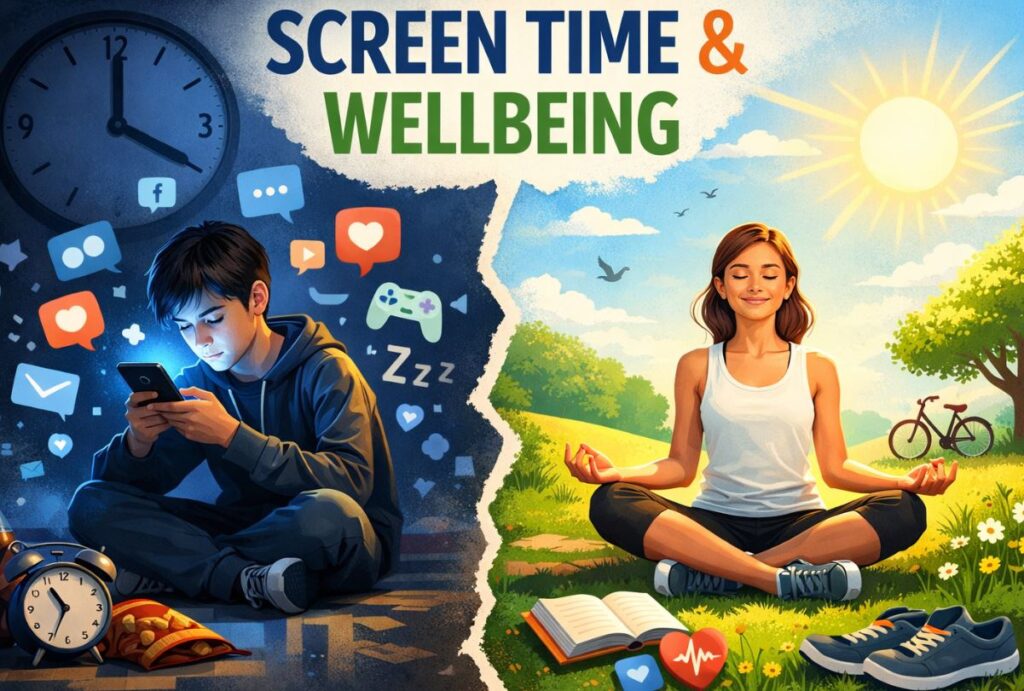
AI generated image by ChatGPT3.5
Key Themes Across the Research
| Theme | Finding |
|---|---|
| The 2-hour threshold | Multiple studies flag 2+ hours of personal screen time daily as a meaningful risk marker |
| Causality is being established | Studies now show screen reduction causes measurable mental health improvement |
| Bidirectionality | Screen use worsens wellbeing, but poor wellbeing also drives more screen use |
| Sleep is the clearest link | Pre-bedtime screen use has the strongest and most consistent evidence of harm |
| Context matters | What you do on screen (passive vs. active, social vs. solo) shapes outcomes more than raw hours |
| Interventions work | Digital nudges, app limits, and intentional reduction all show measurable effects |
Based on a survey conducted in Finland by InterLink Initiative among youth workers and teachers working with young people aged 7–18, screen time was identified as the most prevalent issue affecting youth today.
A 2025 OECD study covering 14 countries found that while digital tools offer real benefits, spending more than 5 hours daily on screens for personal use is linked to noticeably worse well-being outcomes. That said, screen time alone isn’t the main driver — sleep deprivation, financial hardship, and low physical activity are actually stronger predictors of poor well-being than how long someone spends on a device. Context matters too: people who combine heavy screen use with loneliness or unemployment face a much higher risk of poor mental health, suggesting that screens tend to amplify existing vulnerabilities rather than cause harm in isolation.
The following summary was generated with the assistance of Claude (Anthropic, 2025), an AI language model, based on the original source text.
OECD (2025), “Screen time and subjective well-being: Insights from a few countries worldwide”, OECD Policy Insights on Well-being, Inclusion and Equal Opportunity, No. 24, OECD Publishing, Paris, https://doi.org/10.1787/c840403c-en.
Leave a Reply