
Why Digital Resilience Can’t Wait: Inside the AIWARENESS Final Multiplier Event
Artificial Intelligence has changed the landscape for online safety. A voice on the phone can now belong to no one at all. A stranger’s face can be stitched onto a picture and be used as a blackmail. For young people growing up entirely inside this digital environment — and for the youth workers trying to guide them through it — the gap between old-school “spot the fake news” training and today’s AI-powered manipulation has become hugely wide.
A Threat Landscape That Moved Faster Than Expected
A few years ago, media literacy meant teaching people to double-check a suspicious headline or a blurry screenshot. That world is gone. In 2026, deepfake-driven fraud has become a mainstream criminal business model. Ordinary families have been targeted by “emergency call” frauds where a cloned voice of a relative begs for urgent money.
At the same time, disinformation has become more sophisticated and harder to trace to its source, amplified by bot networks and increasingly convincing synthetic media. Recognizing the scale of the problem, the EU AI Act now requires companies to comply to the framework and this is a sign that regulators, not just educators, need to follow the rules.
What the Project Actually Built
AIWARENESS is a Small-Scale Erasmus+ Partnership with a clear, practical goal: strengthen the resilience of young people with fewer opportunities so they can recognize and effectively counter social manipulation, identity theft, and other related online risks in their everyday lives.
Rather than another awareness campaign, the project developed a concrete toolkit and methodology that youth workers can use directly with young people — covering digital footprints, deepfake scams, and identity theft. The aim is twofold: give young people the practical skills to protect themselves, and raise the overall capacity and quality of youth work in this space.
What to Expect at the Multiplier Event
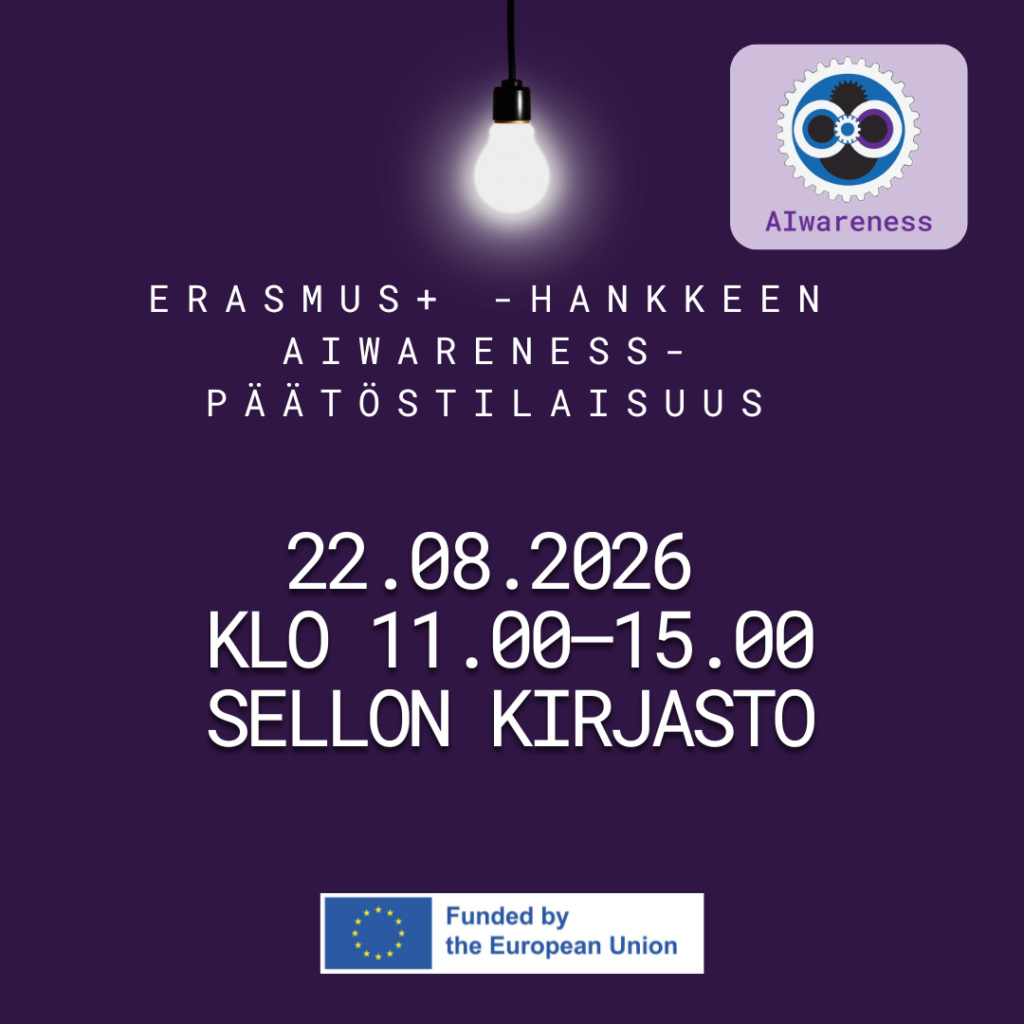
The final event brings the project’s results to life for the people who will carry them forward — youth workers, educators, and partner organizations.
- 11:00–11:30 — Arrival & Registration: Check-in and informal networking.
- 11:30–11:45 — Opening Remarks: Welcome, the day’s agenda, and the purpose of the multiplier event.
- 11:45–12:00 — Project Presentation: The Erasmus+ framework, the project’s goals and target groups, and the background and results behind what was developed and why.
- 12:00–13:00 — Coffee Break: Time to connect over coffee and light refreshments.
- 13:00–14:30 — Interactive Session: Training & Hands-On Practice: Testing the project’s results and methods, small-group work, participant feedback, a summary of key takeaways, and a look at what comes next.
- 14:30–15:00 — Networking & Closing: Exchanging contacts and closing remarks.
Why This Matters Beyond One Afternoon
The value of a multiplier event isn’t the event itself — it’s what happens afterward, when the tools in the room start showing up in youth work sessions across the country. Every youth worker who leaves this event equipped to talk credibly about deepfakes, digital footprints, and identity theft is one more line of defense for young people navigating an information environment that is only going to get more synthetic, more personalized, and more convincing.
Finland has already shown that resilience against manipulation can be taught and built at scale. AIWARENESS is about making sure that resilience keeps pace with the technology it’s up against.
Register for the AIWARENESS Final Multiplier Event.
Leave a Reply